nuovo blog
Spinta dalle duplici forze dell'alleggerimento automobilistico e dagli obiettivi globali di riduzione delle emissioni di carbonio, la sostituzione del metallo con la plastica è diventata una direzione chiave nell'innovazione dei materiali automobilistici.PA6 rinforzato con fibra di vetro lunga(LFT-PA, poliammide rinforzata con fibra di vetro lunga), grazie alla sua eccellente resistenza specifica, tenacità all'impatto e resistenza al calore, si sta espandendo rapidamente dai componenti non portanti alle applicazioni strutturali e portanti, emergendo come un ponte critico tra le plastiche ingegneristiche convenzionali e i materiali metallici.
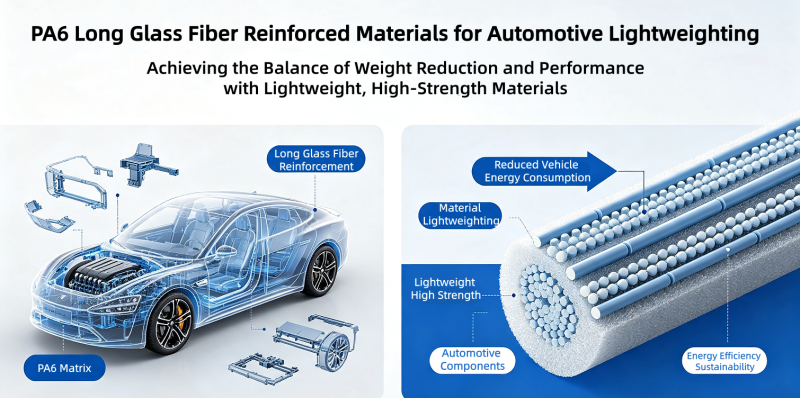
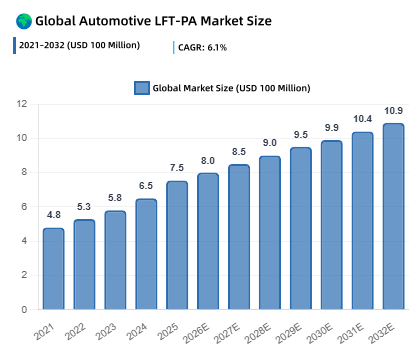
Nel 2025, il mercato globale della poliammide rinforzata con fibra di vetro lunga (LFT-PA) per applicazioni automobilistiche è stato valutato a circa 5,97 miliardi di RMB (754 milioni di USD), con un volume di vendite che ha raggiunto 210.000 tonnellate metriche. Si prevede che il mercato globale si avvicinerà a 9,016 miliardi di RMB entro il 2032, con un tasso di crescita annuale composto (CAGR) del 6,1% dal 2026 al 2032.
Questo articolo fornisce un'analisi sistematica delle opportunità e delle sfide che il PA6 rinforzato con fibra di vetro lunga deve affrontare nell'era dell'alleggerimento automobilistico, coprendo il panorama del mercato, le caratteristiche tecniche, i driver politici, la struttura della catena industriale e le dinamiche competitive.
La poliammide rinforzata con fibra di vetro lunga (LFT-PA) per uso automobilistico si riferisce a un materiale composito termoplastico rinforzato in cui gli stoppini di fibra di vetro continua sono accuratamente impregnati con una fusione di PA6/PA66 durante il processo di pultrusione o compounding in linea. Dopo la pellettizzazione, la lunghezza della fibra rimane tipicamente di circa 5–25 mm.
Rispetto ai materiali rinforzati con fibra di vetro corta, le fibre di vetro lunghe mantengono un rapporto d'aspetto più elevato, consentendo ai componenti stampati di ottenere una resistenza all'impatto, resistenza allo scorrimento viscoso e resistenza specifica significativamente migliori.
I principali vantaggi competitivi del PA6 rinforzato con fibra di vetro lunga si riflettono nei seguenti indicatori chiave di prestazione:
| Indicatore di prestazione | Valore tipico | Vantaggio comparativo |
|---|---|---|
| Resistenza alla trazione | 120–195 MPa | Paragonabile ad alcune leghe di alluminio |
| Modulo flessionale | 8.600–11.000 MPa | Elevata rigidità e stabilità dimensionale |
| Densità | ≈ 1,15 g/cm³ | Circa il 40% inferiore rispetto alle leghe di alluminio |
| Resistenza al calore | 80–150°C | Soddisfa le tipiche condizioni operative sotto il cofano |
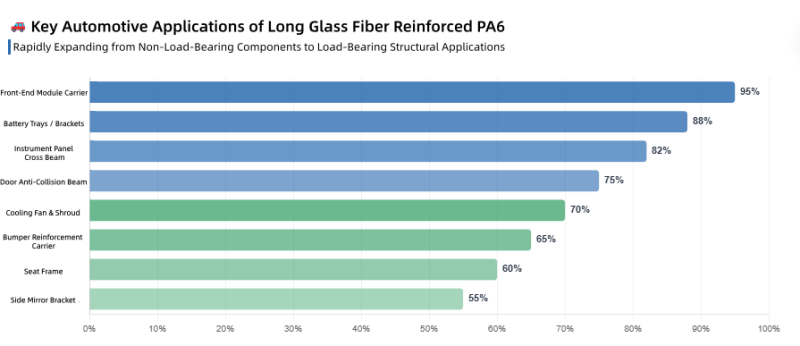
I componenti stampati a iniezione possono mantenere un'elevata rigidità, resistenza allo scorrimento viscoso ed eccellente tenacità all'urto a temperature comprese tra 80–150°C. Sono ampiamente utilizzati in applicazioni strutturali portanti come supporti per moduli frontali, vassoi per batterie e barre anti-intrusione per portiere.
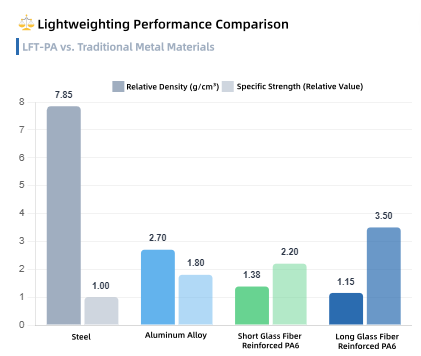
Il PA6/PA66 rinforzato con fibra di vetro può ottenere una riduzione del peso del 60%–65% quando sostituisce le leghe di alluminio. Lo stampaggio a iniezione integrato può inoltre ridurre il numero di componenti da 12 a solo 1, con una potenziale riduzione del 30% dei costi di produzione.
Nel 2025, il mercato globale della poliammide rinforzata con fibra di vetro lunga per il settore automobilistico è stato valutato a circa 5,97 miliardi di RMB (754 milioni di USD), con un volume di vendite che ha raggiunto le 210.000 tonnellate e un prezzo medio di 3.815 USD per tonnellata. Entro il 2032, si prevede che il fatturato del mercato globale si avvicinerà a 9,016 miliardi di RMB, rappresentando un CAGR del 6,1%.
Da una prospettiva più ampia, il mercato globale della poliammide rinforzata con fibra di vetro lunga, incluse le applicazioni non automobilistiche, è stato valutato a circa 942 milioni di USD nel 2025, con un volume di vendite che ha raggiunto le 260.000 tonnellate. Si prevede che il mercato raggiungerà 1,641 miliardi di USD entro il 2034, rappresentando un CAGR dell'8,5%.
In qualità di maggiore produttore automobilistico al mondo, che rappresenta circa 32% della produzione automobilistica globale, la Cina continua a rafforzare la propria posizione nel mercato dei materiali rinforzati con fibra di vetro lunga PA6.
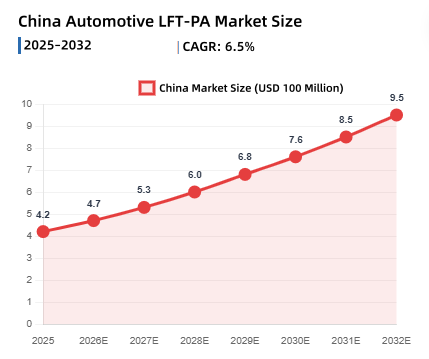
Secondo le previsioni di QYResearch, si prevede che il fatturato del mercato cinese del poliammide rinforzato con fibra di vetro lunga per il settore automobilistico raggiungerà 1,275 miliardi di USD entro il 2032, con un CAGR del 6,5% dal 2026 al 2032.
Si prevede che il mercato cinese complessivo del nylon rinforzato con fibra di vetro raggiungerà 7,915 miliardi di USD entro il 2032, crescendo a un CAGR del 5,0%.
A partire dal 1° gennaio 2026, la Cina ha implementato lo standard nazionale obbligatorio GB 27999—2025, che stabilisce gli obiettivi per le emissioni di anidride carbonica dei veicoli passeggeri. Lo standard stabilisce inoltre un obiettivo di circa 78,2 g/km per le emissioni medie di CO₂ dei veicoli passeggeri entro il 2030.
Nell'aprile 2026, il Ministero dell'Industria e dell'Information Technology (MIIT), insieme ad altri quattro dipartimenti governativi, ha emesso congiuntamente le Linee guida per la progettazione ecocompatibile dei prodotti industriali (edizione 2026). L'alleggerimento è identificato come una delle 11 direzioni chiave per la progettazione di prodotti ecologici.
“I veicoli a nuova energia hanno requisiti particolarmente elevati in termini di riduzione del peso e sicurezza della batteria. In un certo senso, ridurre il peso rappresenta un valore economico.”
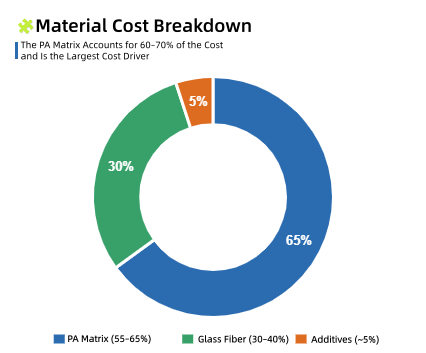
Le materie prime rappresentano complessivamente circa 75%–80% del prezzo franco fabbrica, rendendo i prezzi di mercato della resina poliammidica il principale motore delle fluttuazioni dei costi.
Il mercato globale può essere suddiviso in linea di massima in due grandi schieramenti: leader del settore internazionale e produttori cinesi.
Aziende internazionali: BASF, LANXESS, DuPont, Solvay, Celanese, SABIC, RTP, Mitsubishi Chemical, Asahi Kasei, LyondellBasell e altre.
Aziende cinesi: Kingfa, Shanghai Pret, Nanjing Julong, Xiamen LFT e altre.
Si prevede che il mercato globale dei veicoli elettrici raggiungerà 45 milioni di unità all'anno entro il 2030. La richiesta di alleggerimento è ancora più critica nei veicoli elettrici.
Il nylon rinforzato con fibra di vetro lunga può essere utilizzato nei componenti strutturali del pacco batteria, offrendo una resistenza alla trazione di ≥150 MPa riducendo al contempo la densità di circa 40% rispetto alle leghe di alluminio.
La sostituzione dei componenti metallici tradizionali con termoplastici rinforzati con fibre lunghe ad alte prestazioni offre significative opportunità per riduzione del peso, integrazione strutturale e ottimizzazione dei costi di produzione.
I veicoli a nuova energia che incorporano questi materiali possono ottenere fino al 15% di riduzione del peso del veicolo, aumentando potenzialmente l'autonomia di guida da 550 km a 680 km.
L'innovazione tecnologica è sempre più focalizzata su un maggiore contenuto di fibra di vetro, modifiche ritardanti di fiamma e basse emissioni di VOC. Lo stampaggio a iniezione di fibra di vetro lunga sta gradualmente sostituendo il rinforzo a fibra corta, offrendo una migliore resistenza strutturale.
Il settore sta migliorando continuamente le prestazioni dei materiali attraverso processi ottimizzati di modifica dei copolimeri e tecnologie di compatibilità interfacciale.
La resina PA rappresenta circa il 60%–70% dei costi dei materiali, con prezzi che fluttuano lungo la catena del valore benzene-acido adipico. La produzione di fibra di vetro è ad alta intensità energetica e altamente sensibile ai prezzi del gas naturale. Dal 2025, le fluttuazioni dei prezzi globali dell'energia e la maggiore incertezza della catena di approvvigionamento hanno ulteriormente intensificato le pressioni sui costi.
La poliammide rinforzata con fibra di vetro lunga è solitamente più costosa del 20%–30% rispetto alle alternative rinforzate con fibra corta. Rispetto ai materiali tradizionali come l'acciaio, deve ancora affrontare un divario di prezzo significativo, che ne limita la penetrazione in componenti ad alto volume e sensibili ai costi.
Il materiale richiede un controllo preciso della temperatura e attrezzature specializzate per lo stampaggio a iniezione, il che può limitare l'adozione tra i fornitori automobilistici più piccoli con capacità tecniche limitate.
Materie prime chiave come caprolattame e fibre di vetro speciali sono soggette a carenze periodiche di approvvigionamento, che influiscono sui programmi di produzione e sui costi dei materiali. Le politiche tariffarie degli Stati Uniti nel 2025 hanno inoltre introdotto ulteriore incertezza nelle catene di approvvigionamento globali.
Poiché i requisiti di alleggerimento automobilistico continuano ad aumentare e le tecnologie dei materiali avanzano, i materiali PA6 rinforzati con fibra di vetro lunga si stanno espandendo dai pannelli della carrozzeria e dai componenti interni verso applicazioni di maggior valore come componenti strutturali del telaio e sistemi di propulsione.
I produttori cinesi stanno rapidamente guadagnando terreno nel mercato di fascia media, con una capacità produttiva annuale per linea di produzione che raggiunge le 4.000–20.000 tonnellate. Con il continuo sviluppo dell'esperienza tecnologica e delle economie di scala, si prevede che i materiali prodotti internamente ridurranno ulteriormente il divario con i leader internazionali in termini di coerenza delle prestazioni e competitività dei costi.
Lo sviluppo della guida autonoma sta creando nuove opportunità per i materiali PA6 rinforzati con fibra di vetro lunga in componenti strutturali di precisione come alloggiamenti per sensori e componenti radar. Nel frattempo, l'elettrificazione dei veicoli continua ad espandere le applicazioni in aree che includono pacchi batteria e componenti per motori elettrici.
Normative ambientali globali più rigorose stanno guidando lo sviluppo di materiali a basso contenuto di COV e riciclabili. Si prevede che l'esplorazione di soluzioni sostenibili come i nylon a base biologica, incluso il PA11, aprirà nuove opportunità di crescita per il settore.
I materiali rinforzati con fibra di vetro lunga PA6 stanno entrando in un periodo di opportunità strategicamente importante, trainato dall'alleggerimento dei veicoli. Sotto l'influenza combinata di normative più rigorose sulle emissioni di carbonio, crescente penetrazione dei veicoli a nuova energia e accelerazione della sostituzione metallo-plastica, si prevede che il mercato globale crescerà da circa 6 miliardi di RMB nel 2025 a oltre 9 miliardi di RMB entro il 2032.
Tuttavia, la volatilità dei costi delle materie prime, gli elevati requisiti di lavorazione e la stabilità della catena di approvvigionamento rimangono sfide chiave per il settore.
Per i fornitori di materiali, le priorità saranno ottimizzare continuamente i rapporti costo-prestazioni, approfondire lo sviluppo collaborativo con le case automobilistiche e investire in tecnologie per materiali verdi e sostenibili.
Per le case automobilistiche, i materiali rinforzati con fibra di vetro lunga PA6 non sono più semplicemente una “soluzione opzionale”, ma sempre più una tecnologia “indispensabile” per ottenere un vantaggio nella corsa all'alleggerimento automobilistico.
Seguici :


-- ricevi aggiornamenti con gli ultimi argomenti

 e-mail
 italiano
 English
 français
 Deutsch
 русский
 español
 português
 العربية
 日本語
日本語 한국의
한국의 中文
中文