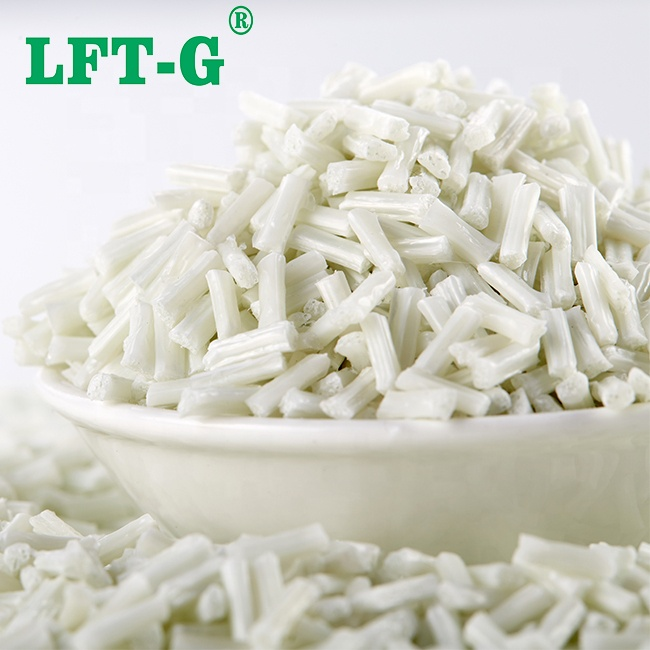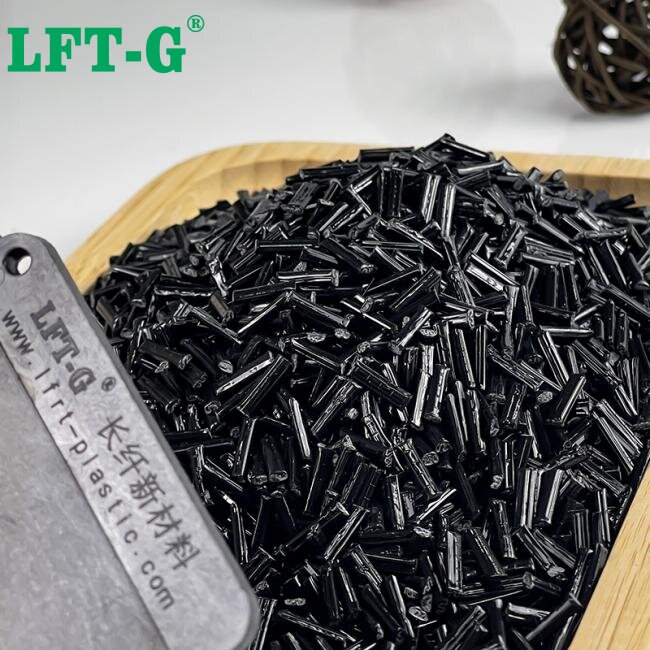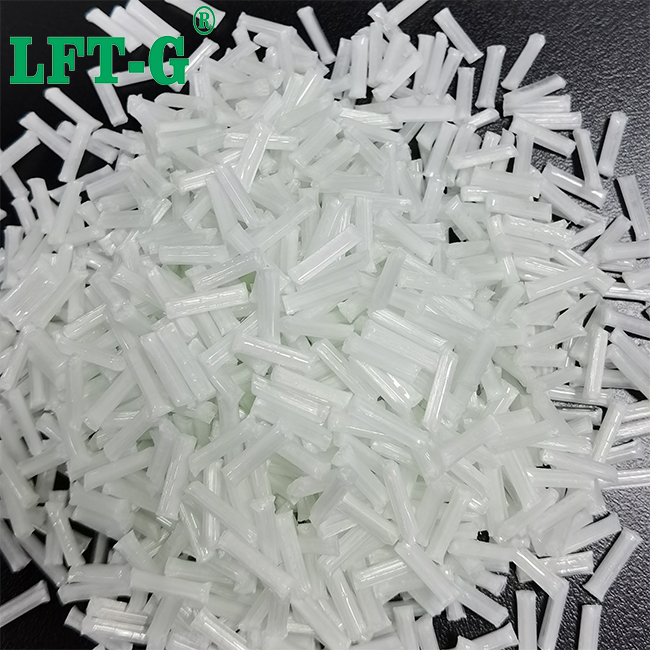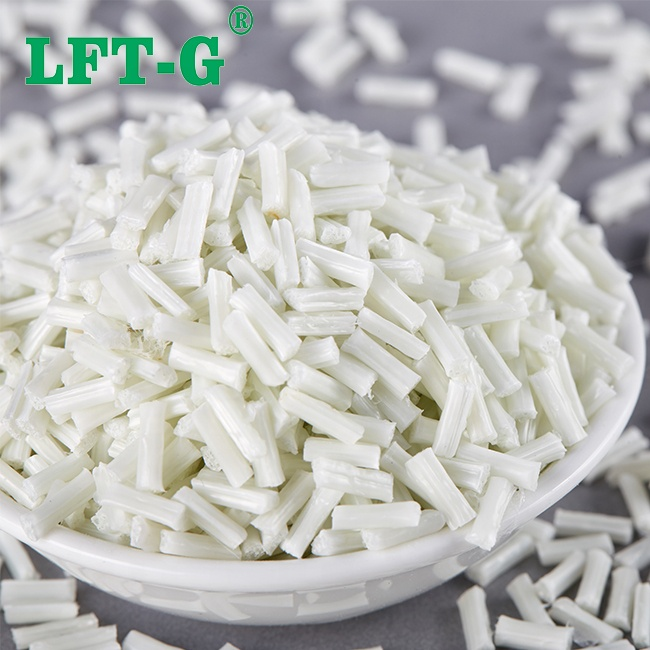
TPU LGF30 termoplastico a fibra lunga TPU LGF densità e TDS
Forma: lunghezza circa 12 mm, alta resistenza, alta tenacità
Vantaggio: più di 20 anni di esperienza nel prodotto in plastica rinforzata con fibra.
lft-g è un team guidato da professionisti che lavorano nel settore delle materie plastiche da quasi 20 anni. siamo specializzati in design, ricerca e sviluppo, fibra di vetro lungo su misura per i clienti; lunga fibra di carbonio; lunga e completa fibra di vetro e fibra di carbonio lunga; composito in fibra speciale. i materiali possono essere ampiamente utilizzati nel settore aerospaziale, automobilistico, militare; elettrodomestici;
√ Il primo schienale del sedile indipendente leggero della terza fila √ La soluzione aiuta le nuove auto a perdere il 30% di peso e a risparmiare il 15% sui costi rispetto al loro predecessore Le parti leggere sono state applicate e applicate con successo alle nuove auto del 2021. Il nuovo modello, che dovrebbe essere messo in vendita nella seconda metà di quest'anno, è riuscito a ridurre il peso corporeo con un componente leggero sullo schienale della poltrona della terza fila. La terza fila posteriore della precedente generazione di auto era costituita da 15 diversi componenti in acciaio e la carrozzeria era molto pesante. Quindi si spera che i sedili della terza fila del 2021 soddisfino tutti i criteri di prestazione pur essendo più leggeri e più competitivi in termini di costi. "Essere più leggeri non significa necessariamente essere più costosi", hanno detto i ricercatori. Rispetto al modello della generazione precedente, durante la ricerca e lo sviluppo del nuovo modello, non solo abbiamo ottenuto una riduzione del 30% del peso del sedile della terza fila, ma abbiamo anche risparmiato il 15% del costo. Questi obiettivi vengono raggiunti perché abbiamo molti ottimi partner". Le parti in resina dei seggiolini auto tradizionali contengono rinforzi metallici, che aumentano il costo del processo. La speranza è di ottenere un'intera iniezione di parti senza elaborazioni complesse e costose. Per soddisfare i requisiti, è stato utilizzato un esclusivo prodotto PA6 in poliammide modificato resistente agli urti e rinforzato con fibra di vetro al 35%, insieme al suo strumento proprietario di simulazione al computer (CAE) che può essere utilizzato in più fasi di sviluppo. Gli strumenti proprietari di simulazione al computer (CAE) di Basf "Classifico il design dei sedili della terza fila della Toyota Senna 2021 come una tecnologia abilitante", ha affermato lo sviluppatore. È il primo schienale del suo genere interamente stampato a iniezione ad essere progettato senza inserti e una delle sfide progettuali era garantire che il sedile avesse un elevato allungamento e resistenza agli urti per soddisfare i requisiti di prevenzione degli urti. "Allo stesso tempo, ci siamo concentrati sulla robustezza e sulla rigidità dei sedili, perché anche la terza fila sostiene il pavimento". Contattaci, ti offriremo i migliori materiali al miglior prezzo.
Nylon 12 (PA12) is a kind of polyamide engineering plastics with excellent properties. With rich petroleum by-product butadiene as the main raw material, low production cost, high economic effect, has been widely used in various fields. Modified nylon 12 is made of nylon 12 resin and quantitative filler, color powder, additives and other components blend, after extrusion, granulation and other processes to obtain a thermoplastic with different properties. LFT-G Chemical modified nylon 12 series products are suitable for extrusion, injection molding and other processing technology, can meet the diversified and customized needs of customers, suitable for automobile, electronic appliances, communications, electric power, medical, sports equipment and other fields. Product line includes: Long glass fiber reinforced PA12, Long carbon fiber reinforced PA12 Long glass fiber reinforced PA12 series LFT-G® long glass fiber reinforced PA12 series is divided into LGF20, LGF30, LGF40 and other specifications according to the long glass fiber filling volume, with the long glass fiber content ranging from 20%-60%. Applications: electronic appliances, sports equipment, quick connector, connector, sanitary ware, shell, bracket, etc. Long carbon fiber reinforced PA12 series La serie PA12 rinforzata con fibra di carbonio lunga LFT-G® è suddivisa nelle specifiche LCF30, LCF40, LCF50 in base alla quantità di riempimento della fibra di carbonio (20% -60%). Ha una buona resistenza, stabilità dimensionale, conducibilità, resistenza agli urti, ecc. Applicazioni: apparecchi elettronici, attrezzature sportive, connettore rapido, connettore, sanitari, scocca, staffa, ecc. Per noi sono disponibili anche altri PA12 funzionali come il grado resistente Toughten, il grado resistente ai raggi UV, ecc.
Sales of new energy vehicles increased significantly Make the concept of "car lightweight" It's hot again. A variety of modified plastics, composite materials and light alloy materials are increasingly mature, not only in the traditional automobile engine around, but also in the power battery of new energy vehicles, there are a variety of plastic applications. But these plastics do not perform well on the safety issue of flame retardancy. Flame retardant and its related industries along with "automobile lightweight" become the hot spot of the automobile industry. Development direction of flame retardant plastics for auto parts At present, the common types of flame retardant materials used in automotive parts are PP, PA, PU, PC, ABS materials, as well as a variety of modified materials and composite materials composed of them. Compared with traditional fuel vehicles, new energy vehicles have added battery modules, charging piles and charging guns and other components. ➡️ The amount of engineering plastics used for battery pack module of a single new energy vehicle is about 30kg. The plastic shell of new energy vehicle mainly uses modified PP, modified PPS, PPO and other high temperature resistant plastics. ➡️ Charging piles require engineering plastics due to high usage standards and harsh operating environment. Each charging pile needs about 6kg engineering plastics. At present, PBT, PA and PC are commonly used. When preparing flame retardant plastics, most of them will increase their limiting oxygen index LOI to about 25-35%, so as to effectively improve the overall safety index of vehicles. In addition, with the current combination of electrification and carbon neutrality, plastics and various flame retardants containing halogens will be more restricted. Therefore, the future development direction of flame retardant plastics, in addition to the need for sufficient mechanical properties to meet the lightweight demand, in electric vehicles and other fields will also need materials to pay attention to the electrical, processing, environmental protection requirements Flame retardants will develop towards the direction of halogen-free and high performance, while the research focus of high performance flame retardants will develop towards the direction of complex co-effect flame retardants, halogen-free flame retardants, expansion flame retardants, superrefinement, nano technology, high efficiency surface chemical modification technology and multi-functional technology. Application of flame retardant materials in automobile parts At present, the flame-retardant plastics mainly used are PP, PU, ABS and PC. According to the special needs of automobile parts, composites (alloying), PA, PBT and PMMA are also used accordingly. Flame retardant PP PP is the largest amount of automotive plastic polymer material, has excellent chemical corrosion resistance, and the processing process is simple, low cost. Widely used in automobile instrument panel, battery pac...

Long Glass Fiber reinforced polypropylene plastic refers to the modified polypropylene composite material which contains the glass fiber length between 10 and 25mm. After injection molding and other processes, the three-dimensional structure is formed. It is also called Long Glass Fiber polypropylene, or LGFPP. There are also many materials at home and abroad referred to Long fiber reinforced thermoplastic as LFT, that is, the abbreviation of long-fiber reinforce thermoplastic. From the material definition, LGFPP belongs to a kind of LFT. Material characteristics Microstructure determines macro performance, so 10~25mm long glass fiber reinforced plastics (LGFPP) compared with ordinary 4~7mm short glass fiber reinforced plastics (GFPP) has higher strength, stiffness, toughness, dimensional stability, low warpage. In addition, long glass fiber reinforced polypropylene has better creep resistance than short glass fiber reinforced polypropylene even if it is subjected to 100℃. On the injection molding product, the long glass fiber interleaved into a three-dimensional network structure, even after the polypropylene substrate is burned, the long glass fiber network still forms a certain strength of the glass fiber skeleton, while the short glass fiber after burning generally into a non-strength fiber skeleton. This is mainly because the ratio of length to diameter of reinforced fiber determines the reinforcement effect. The critical length to diameter ratio is L/D. The packing and short glass fiber with the critical length to diameter ratio less than 100 have no reinforcement effect, while the long glass fiber with the critical length to diameter ratio less than 100 has the reinforcement effect. Compared with metal materials and thermosetting composites, the density of long glass fiber plastics is low, and the weight of the same parts can be reduced by 20~50%. Long glass fiber plastics can provide designers with greater design flexibility, such as forming parts with complex shapes, integrating the number of parts used, saving the cost of the mold (generally the cost of long glass fiber plastic injection mold is about 20% of the cost of metal stamping mold). Reduce energy consumption (production energy consumption of long glass fiber plastics is only 60~80% of steel products, 35~50% of aluminum products), simplify the assembly process. What are the typical application parts of automobile Based on the application advantages of long glass fiber material, it has been applied more and more widely in automobiles. In the mainstream models and new models, we have seen more and more of the following parts are made of long glass fiber reinforced polypropylene material. Long fiber reinforced polypropylene is used in car dashboard body frame, battery bracket, front end module, control box, seat support frame, spare placenta, fender, chassis cover plate, noise partition, rear door frame, etc. The following, a few long glass fiber plastic typical application parts a...
Il team di lft-g® ha una conoscenza combinata di 20 anni di materiali compositi, i nostri progettisti, materiali e ingegneri di processo sono sempre disponibili a rispondere alle vostre domande e il nostro partner sarà lì per supportarvi durante l'intero ciclo di vita del prodotto.
condividere con voi alcuni dei nuovi prodotti di sviluppo della nostra fabbrica, partecipazione a forum di settore, formazione, mostre e condivisione con esempi di forum di alto livello sponsorizzati dall'industria.
2026
Exhibition News · 2026 Xiamen LFT at EP Shanghai &ES Shanghai 2026 Exploring Long Fiber Reinforced Thermoplastics for Electrical and Power Equipment Applications DEC 03–05, 2026SHANGHAI, CHINABOOTH N4C11B Contact Our Team → CONNECTING MATERIALS WITH INDUSTRY Advancing Material Solutions for the Power Industry Xiamen LFT Composite Plastics Co., Ltd. is pleased to announce its participation in EP Shanghai &ES Shanghai 2026, taking place from December 3 to 5 in Shanghai, China. As a specialist in long fiber reinforced thermoplastic composites, LFT-G develops material solutions designed to meet demanding mechanical and processing requirements across a range of industrial applications. At this exhibition, we look forward to connecting with electrical equipment manufacturers, engineers, and industry partners to explore the potential of LFT materials in power and industrial applications. EP Shanghai &ES Shanghai 2026 · Booth N4C11B 01 Evolving Material Requirements in Power Equipment Performance, reliability and design flexibility Electrical and power equipment operates under a wide range of mechanical, thermal and environmental conditions. Choosing the right engineering material is essential to component performance, product durability and manufacturing efficiency. Depending on the application, manufacturers may need to balance mechanical strength, dimensional stability, heat resistance, electrical insulation, flame retardancy and processing requirements. These factors make application-specific material selection increasingly important. 01 Mechanical Performance Strength, stiffness and resistance to deformation. 02 Thermal Stability Performance suited to specified operating temperatures. 03 Electrical Safety Grade-specific insulation and flame-retardancy requirements. 04 Manufacturing Efficiency Injection molding and design integration opportunities. 02 Why Consider Long Fiber Reinforced Thermoplastics? A combination of thermoplastic processing and fiber reinforcement Long fiber reinforced thermoplastics (LFT) combine a thermoplastic resin matrix with longer reinforcing fibers. Compared with conventional short-fiber reinforced compounds, suitable LFT grades can offer advantages in structural performance and resistance to deformation in appropriately designed components. Structural Strength Long fiber reinforcement can help improve stiffness and mechanical performance, depending on fiber orientation, material formulation and part design. Lightweight Design Potential weight reduction compared with selected alternative materials, subject to component-level engineering validation. Design Flexibility Injection molding enables complex geometries and integrated features for appropriately designed components. Grade Selection Different resin systems and reinforcement levels can be evaluated against specific thermal, mechanical and environmental requirements. Note:Actual material performance depends on the grade, component design and processing condi...
leggi di più2026
DIARIO LFT-G / RIEPILOGO DELLA FIERA Cinque giorni a Friedrichshafen. Un futuro più forte insieme. Uno sguardo indietro a FAKUMA 2026: conversazioni significative, nuove connessioni e nuove prospettive sui termoplastici rinforzati con fibre lunghe. EVENTO FAKUMA 2026 LUOGO Friedrichshafen, Germania TROVACI Padiglione A7 · Stand 7512-4 FAKUMA 202612–16 ottobre 2026 · Germania 01 / L'ESPERIENZA Più di una fiera. Un incontro di idee. FAKUMA ha riunito ancora una volta professionisti di tutto il settore della lavorazione delle materie plastiche. Per il team LFT-G, la fiera è stata un'opportunità per incontrare i clienti faccia a faccia, scambiare approfondimenti tecnici ed esplorare nuove possibilità di cooperazione. Dai progetti in corso alle nuove sfide applicative, ogni conversazione ci ha aiutato a comprendere meglio ciò che conta per i nostri clienti e come la giusta soluzione di materiale possa contribuire ai loro obiettivi. LFT-G · Padiglione A7, Stand 7512-4 02 / INNOVAZIONE DEI MATERIALI Progettare migliori possibilità con i termoplastici rinforzati con fibre lunghe A FAKUMA, abbiamo discusso di soluzioni di materiali LFT e potenziali applicazioni con visitatori di diversi settori. Le nostre conversazioni hanno coperto la selezione dei materiali, le prestazioni meccaniche, la progettazione dei componenti e i requisiti di elaborazione. Ogni applicazione comporta una serie di esigenze specifiche. Ecco perché diamo valore a una comunicazione stretta con i clienti: comprendendo le loro sfide e lavorando insieme verso soluzioni di materiali adatte. 01 Competenza nei materiali Comprensione delle proprietà dei materiali e dei requisiti di prestazione. 02 Focus sulle applicazioni Collegare la selezione dei materiali con le reali esigenze del progetto. 03 Collaborazione con i clienti Costruire soluzioni attraverso discussioni tecniche aperte. 03 / PERSONE E PARTNERSHIP Grandi conversazioni. Connessioni durature. La parte più preziosa di qualsiasi fiera sono le persone che incontriamo. Siamo stati felici di riconnetterci con partner familiari, accogliere nuovi contatti e ascoltare direttamente i progetti e le idee che plasmano il settore. Momenti memorabili con clienti e partner del settore a FAKUMA 2026. La fiera finisce. Le conversazioni continuano. Un sentito ringraziamento a tutti coloro che hanno visitato LFT-G nel Padiglione A7, Stand 7512-4. Il vostro tempo, le vostre idee e il vostro interesse hanno reso la nostra partecipazione a FAKUMA 2026 davvero significativa. Non vediamo l'ora di dare seguito alle discussioni di Friedrichshafen, esplorare nuove opportunità e costruire partnership a lungo termine con clienti di tutto il mondo. PARLIAMO DI MATERIALI Hai un progetto in mente? Parlaci della tua applicazione e dei tuoi requisiti tecnici. Il nostro team sarà lieto di discutere con te potenziali soluzioni in materiale LFT. Contatta il nostro team → Argomenti:FAKUMA 2026 · LFT-G · Termoplastici Rinforzati con Fibre Lunghe · Materiali LFT · Lavor...
leggi di più2026
Gentili Clienti e Visitatori, In occasione dell'avvicinarsi della Festa Nazionale e della Festa di Metà Autunno, vi comunichiamo il nostro calendario delle festività: Periodo di chiusura per festività: 25–27 settembre 2026 e 1–7 ottobre 2026 Giornate lavorative di recupero: 20 settembre (domenica) e 10 ottobre (sabato) Ripresa delle normali attività lavorative: 8 ottobre (giovedì) Durante i periodi festivi, i nostri uffici rimarranno chiusi e le spedizioni saranno temporaneamente sospese. Vi chiediamo la massima comprensione per eventuali disguidi che ciò potrebbe causare. Tutte le richieste e gli ordini ricevuti durante le festività verranno presi in carico tempestivamente alla ripresa delle normali attività. Ringraziamo di cuore per il vostro continuo supporto e per la collaborazione. Auguriamo a voi e alle vostre famiglie una felice Festa di Metà Autunno e una splendida Festa Nazionale! Cordiali saluti,
leggi di più